

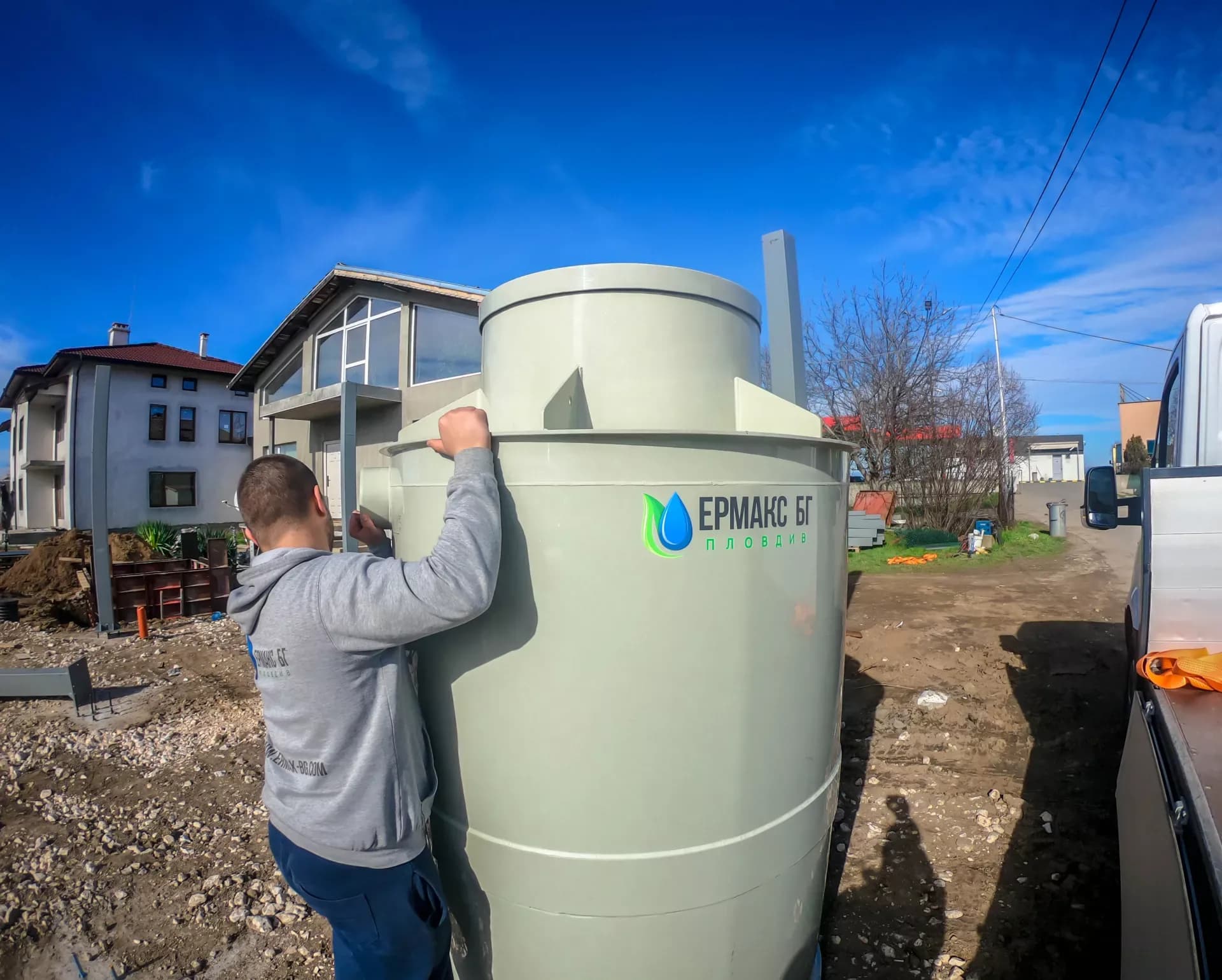
A car service, a car wash and a petrol station have one thing in common: the water that drains from them carries oil, fuel, sand and mud. If it goes straight into the sewer or the soil, the pollution is serious. That is why a sludge and oil separator is installed at the outlet of sites where petroleum products can get into the wastewater or rainwater.
In this article ERMAX BG explains who needs such a unit, how it is sized, where it is installed and how it is maintained so that it works reliably for years.
Who needs a sludge and oil separator
The unit is needed wherever water comes into contact with vehicles, fuels or lubricants. Most often these are:
- car services and service centres;
- car washes, including self-service ones;
- petrol stations and fuel depots;
- car parks and garages;
- warehouse bases and transport areas;
- scrap yards, car showrooms and industrial sites with machinery.
Exactly what is required for a particular site depends on the municipality and on where the water is discharged. Clarify the requirements with the municipality and the Regional Inspectorate of Environment and Water (RIOSV) at the design stage.
What the unit removes
A sludge and oil separator works by gravity, without pumps or electrical parts. The water passes through several zones in turn:
- Settling zone: sand, mud and other heavy particles fall to the bottom and the flow calms down.
- Petroleum separation zone: oils and fuels, which are lighter than water, rise to the surface.
- Coalescing filter: it captures fine oil droplets and merges them into larger ones, which also rise.
An important limitation: the unit is not suitable for stable emulsions that do not separate by gravity. Some cleaning products can form such emulsions, so the chemicals used on site are discussed when choosing. You will find more about the design in the article what a sludge and oil separator is.
How it is sized: flow in l/s
The unit is selected by the flow that has to pass through it, in litres per second (l/s). The ERMAX BG KMU 1–200 series covers flows from 1 to 200 l/s, so it suits both a small workshop and a large transport yard.
The flow depends on the type of site:
- Open areas (car parks, yards, petrol stations): rainwater runoff is decisive. It depends on the area the water is collected from, the type of paving and the rainfall intensity in the region.
- Car washes: the flow of the washing equipment, the number of bays working at the same time and whether rainwater also enters the system are decisive.
- Indoor workshops and garages: water comes mainly from floor washing and floor drains. The flow is usually smaller, but the pollution can be more concentrated.
An undersized unit cannot retain petroleum products during heavy rain or on a busy day and lets them pass through. That is why sizing is done by an engineer using the site's real data, not by analogy with a neighbouring property.
Where it is installed
- After the water from the site is collected and before the discharge point, so that all contaminated water passes through it.
- With gravity inflow. Pumps upstream of the unit are avoided where possible, because they break up the oil droplets and make separation harder.
- With easy access for inspection and for the truck that pumps out the accumulated sludge and petroleum products.
- Allowing for loads from above: if vehicles will drive over or next to the unit, this is taken into account during installation and when choosing the covers.
- Allowing for groundwater: where the level is high, the unit is secured against uplift, as with any underground tank.
Manufacturing time for the KMU 1–200 is 3–5 working days. Installation is carried out by the ERMAX BG team and commissioning by a technical specialist. The warranty is 2 years.
Emptying and inspection: a routine that works
A sludge and oil separator has no moving parts, but that does not mean it needs no care. Over time sludge builds up at the bottom and a layer of petroleum products collects on the surface. When they take up too much of the volume, the unit stops retaining the pollutants.
- Regular visual inspection: sludge level, thickness of the oil layer, condition of the inlet and outlet.
- Cleaning or replacing the coalescing filter according to the load.
- Pumping out the sludge and petroleum products by a licensed company, which hands the waste over for treatment.
- An extra check after heavy rain, after a fuel or oil spill and after winter, when the yards carry a lot of sand and mud.
- A maintenance log: date, what was done and by whom. It helps fine-tune the schedule and is useful during inspections.
The frequency depends on the load and is set in the maintenance plan. ERMAX BG offers maintenance under contract, so inspections do not depend on staff remembering them.
Sludge and oil separator or grease trap?
Both units work on a similar principle, separation by density, but they are designed for different pollutants. A sludge and oil separator deals with petroleum products: oils, fuels and hydraulic fluids, together with sand and mud. The MU 1–10 grease trap deals with organic fats from kitchens and food outlets. One does not replace the other. If a site has both a workshop and a café, each unit serves its own flow. You will find a detailed comparison in the article sludge and oil separator vs grease trap: which one you need and when.
Frequently asked questions
What size do I need for a car wash?
It depends on the flow of the washing equipment, the number of bays and whether rainwater also enters the system. The KMU 1–200 series covers 1 to 200 l/s. The exact size is determined after a site visit and a calculation of the real flow.
Is a sludge and oil separator needed for a car park or garage?
Wherever water can carry oil and fuel away from vehicles, the unit is sensible protection. Whether it is mandatory for a particular site depends on the discharge point and local requirements, so check with the municipality and RIOSV.
Can a car service use only a grease trap?
No. A grease trap is designed for organic fats from kitchens and is not built to retain petroleum products. A car service or car wash needs a unit designed for petroleum products.
Does it need electricity?
No. The unit works by gravity, without pumps or electrical parts, which makes it reliable and easy to maintain.
If you are opening a car service or car wash, or want to check whether your existing unit matches the load, get in touch with ERMAX BG. We will inspect the site, calculate the flow and propose a sludge and oil separator of the right size, with installation and a maintenance plan.